

Deciding which museums to visit in Oslo can be quite the daunting task… but it doesn’t always have to be that way.

Out of roughly 100 museums across the whole of Norway, close to 60 are concentrated in Oslo alone, which makes for a relatively overwhelming time when it comes to picking and choosing which ones to actually prioritise. Naturally, attempting to hit every single one of them is a feat that will prove neither practical nor particularly rewarding; and as such, even for the obsessive-compulsive tourist, the next best option is to then – like a person on a calorie-deficit diet – be intentional about what you choose to put on the list.
Personally, I have (for good reason) long ditched the aching need to check off every single museum there is in the city; and therefore I am compelled to recommend you the same. I haven’t been a fan of performative sightseeing for years; and if you have ever found yourself yourself wearied by your own itinerary before, I expect something around here will resonate. Because this is not intended to be a comprehensive guide to every museum Oslo has to offer (there are, I am quite certain, more than enough resources on the internet tripping over themselves to furnish you with that catalogue); but rather a considered account of the few I did visit, and reasons why they made my list (as well as reasons why they might not make yours).
It is, admittedly, a very short list (what’s a girl to do with only six days in Oslo?); but I would like to think that this list is one that is shaped less by breadth and more by depth. If they serve any purpose at all, it would be to help you not just discover what is out there, but to more meaningfully decide what might (or might not) deserve a place on your own list.
P.S.: All museums here are rated with an unusually high score not because I lack a discerning bone in my body, but rather; that every single museum on this list was already shortlisted according to my personal interests; and as such, would have fared at a decent 7 with me even on its worst day.
P.P.S: For comparative purposes, I am naturally inclined towards history, culture, dead people’s houses (including castles), and anything else that’s unconventionally quirky. Museums that do not fall under these brackets but still do well by me is nothing short of a testament to its undeniable remarkability.
Munch museum

my personal rating:
10/10
THIS MUSEUM IN A GIST:
Dedicated to the life and work of intense brooding artist Edvard Munch (think The Scream, Madonna), this museum spans eleven floors and houses more than twenty thousand pieces from the artist itself (with many more from other complementary artists). Notably the most famous (and most expensive) masterpiece you will see here is The Scream, which last transacted amongst the elites for USD120 million. Before you get any ideas though, it is probably wise to know that the piece is heavily guarded at all times by no less than three armed security personnel, and each version (Munch made four) only sees daylight for thirty minutes at a time, to minimise exposure to light which over time can fade and deteriorate pigments.

go if you:
⇝ Enjoy expressionist, emotional art that hits you in the chest (or really, just enjoy art in general)
⇝ Curious about the tortured minds of artists (not that the museum actually does an exhibit on this; it’s more of the inference you will get as the intensity and obsessive-compulsive nature of his works naturally settle in the corners of your mind.)
⇝ Are short on time because seriously, if you only have room or attention span for just one museum in Oslo, let this be it.
don’t go if you:
⇝ Are not into art, because this might just end up being your own personal eleven levels of hell.


why this made my list:
For me, it was my own obsession with the kind of mind Munch inhabited. It is no secret that he was a very haunted soul, and he remained severely tortured by his own mind for almost all of his own eternity. Walking through the galleries really gives you a sense of that in the most unvarnished way; it was like being able allowed into his emotional universe and feeling, upfront, all the chaos that was going on in his head. It shows up everywhere: in his technique, in his visual language; in the startling expanse of some of his paintings; even, in his deliberate need to make variations of the same piece across different mediums (most of Munch’s works exist in at least three different forms).
Also, not to make this all material, but it’s hard to know exactly how to react when you are standing in the presence of a USD120 million painting. Mostly you will feel like you are above it all – until you are actually there. Should excitement enter the lexicon when describing the effect of something which you know is, to so many who truly understand it for what it is, a shorthand for a very certain kind of turbulence?
Mostly I just like how insanely huge this curation is (once again, eleven floors); and it allows you to absorb Munch at your own pace without directing you how to feel.
(P.S. there is also an immersive bit somewhere on the upper floors that allows you to experiment with crayon rubbings atop textured Munch impressions. It’s super fun, super tactile, super meditative; I absolutely loved the immersion.)
PRICE:
NOK220 (Free Entry with Oslo Pass)
PERSONAL TIP:
As the risk of repeating myself, if you only have space on your list for one museum, make this it. It is incidentally also situated right smack in the middle of Oslo city, so there is literally no reason you have to miss it.

IBSEN museUM & THEATRE


my personal rating:
9/10
THIS MUSEUM IN A GIST:
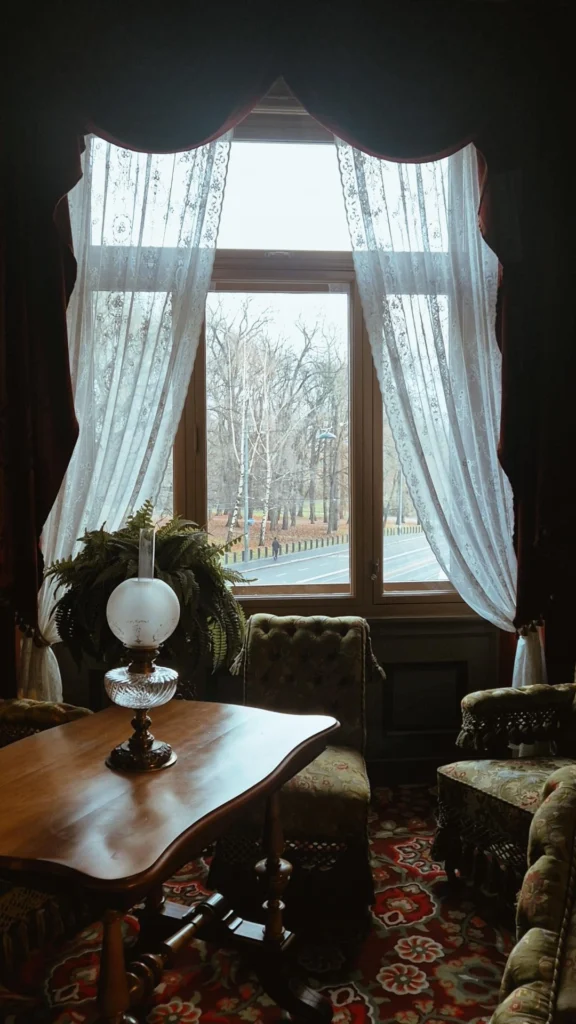
Set in the very apartment where Henrik Ibsen* spent the last years of his life, this is a quiet, intimate museum that focuses on how Ibsen lived and worked, documenting his life’s trajectories through his daily routines, working habits, and also some very certain personal improprieties that were widely known, if rarely discussed openly.
Naturally, the soul of this museum lies inside his very home, where much of the living space remains preserved to an almost unsettling fidelity, from the furniture and fixtures to the tiling and the walls and just the general spatial order of it all. Particularly in Ibsen’s room right at the end of the apartment, you’d want to note, lies the original bed in which the man died in just two months after turning seventy eight… and fitted right on top of it, of course, are the very same sheets that he died on.
* For the uninitiated, Henrik Ibsen was a Norwegian playwright widely regarded as the father of modern drama. His works remain among the most frequently staged worldwide today, second only to Shakespeare.
go if you:
⇝ Enjoy subtle, slow-lived museum experiences.
⇝ Appreciate historical detailing and preservation (this is a true spectacle as far as the latter goes).
⇝ Have actually heard of this man before, fan or not.
don’t go if you:
⇝ Prefer museums with guidance (This is an experience that requires you to absorb and imagine, and is largely atmospheric in nature rather than being explicitly instructive in its course)

why this made my list:
Because I like looking into people’s houses if I am being perfectly honest, and it feels good to do it every once in a while without actually being a creep about it.
Also because I arrived knowing almost nothing about Henrik Ibsen but left fully invested in every habit and quirk of his life, which is a striking testament to how colourful a character this guy – in his own Ibsen-esque ways – truly was. This was a man who, by eighteen, had impregnated his family maid; centered his works around extremely controversial topics of incest and affairs and women wanting to work; and at the age of thirty six, went on a self-exile that lasted for more than thirty years. Then as he approached the final decade of his life, Ibsen came over to Oslo, bought this home, moved in, furnished it up largely with his arthritic wife in mind; and then began writing letters of plea for her to join him in the city. In these letters he was so effusive of all the things there were available in the city and home – including the live-in maid he had hired – that, when she finally caved and moved into the apartment, fired the maid as one of the first things she did.
PRICE:
NOK195 (Free Entry with Oslo Pass)
PERSONAL TIP:
It is not possible to visit Henrik Ibsen’s apartment on your own, so your only way in is via the house tour that starts on the hour, every hour. There really is very little purpose to visiting this museum without a peek inside the apartment (and the guides are fantastically knowledgeable about both Ibsen and his home too); so time your visit accordingly or you’d be wasting around for quite a bit.
NORWEGIAN RESISTANCE MUSEUM


my personal rating:
10/10
THIS MUSEUM IN A GIST:
Akershus Fortress heaves under the weight of its own past. Built in the late thirteenth century under King Haakon V of Norway, the fortress has served as, over the centuries, a royal residence, a military stronghold, and even later a prison. It feels fitting, then, that the Norwegian Resistance Museum should sit within its grounds today, tracing the quiet, dangerous work of Norway’s resistance during the Nazi occupation in World War II.
And that is the Norwegian Resistance Museum in a nutshell. The exhibits move chronologically through the war years with particular emphasis on the civilian resistance that formed in response to the rule, using original photographs, propaganda, clandestine newspapers, weapons, and personal belongings to show how everyday people participated in the resistance.
The museum’s low-lit, claustrophobic subterranean atmosphere is also rightly reminiscent of that of a bunker, with reconstructions of resistance safe houses and prison cells inside, alongside testimonies from those who were arrested, tortured, or executed for their involvement.
Overall, this is a compact but information-dense museum that focuses less on battlefield history, and more on the quiet, often dangerous acts of defiance carried out by ordinary Norwegians during the occupation.
go if you:
⇝ Are into dark tourism.
⇝ Are a student of (or person with interest in) History
⇝ Are a student of (or person with interest in) Political Science and current affairs. You will find what happened then, eeriely reflective of what is happening in the world today.
don’t go if you:
⇝ Do not like information-heavy museums. This exhibit is largely factual and static, and demands mental investment from the observer.


why this made my list:
While it was the war* that drew me here, it was the the narrative of Resistance that really did it for me. Most war museums centre on the more stereotypical markers of conflict – armies, battles, strategies, politics – and I don’t think I have actually ever come across a space that was entirely committed to giving civilian resistance exclusive foreground. Here, the footnote becomes the actual story itself, and I valued immensely the window it gave into a part of the war that is often overlooked: the networks of ordinary people working in the shadows, the quiet courage in spite of fear, the intelligence, the defiance, all the things that usually get mentioned only in passing in the face of institutional crises.
And for me, there was something profoundly eloquent in that.
*I, too, am often compelled by the darker fronts of tourism.
PRICE:
NOK150 (Free Entry with Oslo Pass)
PERSONAL TIP:
If time allows*, follow this with a visit to the Holocaust Center located on the Bygdøy peninsula. Just as the Resistance Museum foregrounds civilian resistance, the Holocaust Center places special import on the slow, almost imperceptible escalation of quiet racism; and is quite the complementary lens to understanding exactly how it all unfolded… even before 1939.
Speaking of…
* though, probably not on the same day, as both locations are not ideally close by each other.
THE NORWEGIAN CENTRE FOR HOLOCAUST AND MINORITY STUDIES


my personal rating:
10/10
THIS MUSEUM IN A GIST:
Just as the Resistance Museum foregrounds the story of civilian defiance, the Norwegian Center for Holocaust and Minority Studies (or just, The Holocaust Museum, for short) turns its attention to another, quieter dimension of the war: the slow architecture of racial prejudice that took root and incubated so imperceptibly it escaped any sustained scrutiny until it became too big to ignore.
go if you:
⇝ went to the Norwegian Resistance Museum and was changed by it.
⇝ Are planning to visit the Norwegian Resistance Museum – in which case, I’d highly recommend you to experience that first before coming here (and once again, I don’t mean in the same day).
⇝ Want to look beyond historical outcomes and instead, trace the gradual currents of complicity that gave rise to one of the most consequential genocides in history.
don’t go if you:
⇝ Want your holiday to be a little less dark.


why this made my list:
Like the Resistance Museum, I fully appreciated that this repository shifts the light to a quieter, often overlooked dimension of the Nazi Rule – in this case, how ordinary biases, when left unchecked, can accumulate into something far more insidious than all the key episodes historians often memorialise. The exhibit right at the end on modern day quiet racism was particularly breathtaking for me. The way it draws a direct line from past to present shows how the very same poison that fueled history’s darkest moments still ripples through the world we live in today, and I am not gonna lie, but it is extremely disturbing how painfully relevant the entire thing feels in our landscape right now.
PRICE:
NOK150 (Free Entry with Oslo Pass)
PERSONAL TIP:
The reason I am nagging you to death not to cram both Museums on the same day is chiefly because of where this one is located. The Bygdøy peninsula has a surprising number of museums, and a few require at least a couple of hours of engagement for anything less would be doing them (and yourself, actually) a great disservice. The air in Bygdøy is also decidedly different: it is a wealthy, suburban harbourfront neighbourhood with quiet streets that reward a slow, deliberate amble, lined with pretty houses that bring tears to the eyes. Where possible, walk; I guarantee you will not be disappointed.
norsk folkenmuseum


my personal rating:
9/10
THIS MUSEUM IN A GIST:
Interchangeably referred to as the Norwegian Museum of Cultural History, Norsk Folkenmuseum is the closest you will come to time travel here.
Spread across a large, village-like site that necessitates at least two to three hours for you to do it any justice, the live, open-air museum brings together historic buildings relocated from all around the country (including the original Gol Stav Church from the eleventh century); with an utterly quaint assortment of houses, retail shops, and communal spaces that traverses all the way back to medieval times.
The re-enactment bit is understandably a little contained during winter; but I imagine this takes a turn for the better during warmer months.
go if you:
⇝ Appreciate architecture and cultural preservation
⇝ Are keen on history – specifically, how commonfolk and societies lived before modernity
⇝ Don’t mind spending a few hours walking outdoors rather than moving through a conventional museum hall.
⇝ Have at least two or (preferably) three hours to spare; this is not one to pop in just to check it off the list.
don’t go if you:
⇝ Prefer compact, indoor museums that you can move through quickly. This one is sprawling and best explored at an unhurried pace.
⇝ Don’t particularly enjoy walking outdoors. The grounds are expansive, and exploring the site properly involves quite a bit of wandering between buildings.
⇝ Are mainly interested in dramatic historical events. The focus here is on everyday life, traditions, and how ordinary communities once lived.


why this made my list:
This is, effectively, everything I could want out of a cultural museum. I loved how lived-in the space feels; and I loved the gentle, wander-at-your-own-speed quality about it. Everything is staged and re-enacted, yet, nothing feels inauthentic that way. And once you have orientated yourself, I loved that all you had to do was just, wander. There is no tightly curated narrative that you are being ushered through; and even though the museum is largely centered on history, nothing alludes to momentous historical moments but rather, the slower, quieter rhythms of everyday life.
I know I said to set aside at least two to three hours for this one; but to be perfectly honest, I could have quite possibly whiled away an entire half-day here.
PRICE:
NOK195 (Free Entry with Oslo Pass)

PERSONAL TIP:
Remember the slow, rewarding amble I was gentling nudging you to go on? This is the perfect opportunity to get those steps in. If you’re doing this, the Holocaust Museum, and the one I’m about to cover next, a leisurely twenty-minute scroll gets you from point to point, and is the loveliest, most authentic way to get acquainted with the hood. Personally, I started from the Holocaust Museum, moved on to Norsk Folkenmuseum, then wrapped up my day at Fram.
fRAM museum


my personal rating:
8/10
THIS MUSEUM IN A GIST:
Fram houses the world’s strongest polar ship that was ever built; which, incidentally, still holds the record today for reaching the farthest North and farthest South points of the Earth. (It was also the first ship to have ever sailed to both the Arctic and Antarctic.)
Being in the mere presence of this multi-record-breaking engineering marvel should, by all means, be more than enough to impress the ordinary onlooker, but just in case it isn’t, immersive exhibits on polar expeditions, equipment, and the explorers themselves leave little doubt as to the sheer audacity and ingenuity behind Fram’s voyages. Visitors (even the discerning ones) are allowed on board (yes, the original ship!) to poke, prod, and leave our grubby little fingerprints all over this extraordinary relic of history, experiencing up close the very environment that tested some of Norway’s most daring explorers.

go if you:
⇝ Like discovering record-breaking history as well as the things, events, and/or people that take it there
⇝ Enjoy hands-on, immersive experiences (yes, I re-confirm: you will be able to step aboard the original Fram ship, where almost every nook and cranny will be open to you)
don’t go if you:
⇝ You’ve gotten this far and are still hard-pressed to find anything about this whole deal that impresses you.
why this made my list:
ngl, I had zero expectation of what to expect when I stepped in here. In retrospect, I even wonder how it made my list. But I am beyond delighted that I did, mostly because it was extremely effective in conveying not just the “wow” of polar explorations, but the immense courage, endurance, turmoil, and difficult life decisions that had to be made, just to make these feats possible.
And of course, the awe of simply being in the presence of something so monumental cannot be dismissed. This was a ship that was built in 1892, which makes it more than 130 years old as we speak. And as I’ve gently pointed out before, if you’ve gotten this far into the bit and are still struggling to find something that piques any of your interest, then it is likely that this just isn’t the museum for you (and there really isn’t anything wrong with that).
PRICE:
NOK180 (Free Entry with Oslo Pass)
PERSONAL TIP:
If you have been a little thorough in your research about the Bygdøy museums, you may have come across a similar museum named the Norwegian Maritime Museum; and you may be wondering which to pick, or if you should even be picking at all. Even though both are essentially marine-themed, it is worth knowing that the similarities just about end there. Where Fram is immersive, intimate, and very specific in its polar expedition history, the Norwegian Maritime Museum is broader in scope. In the latter, information spans centuries of Norway’s seafaring history, from fishing and coastal life to shipping and marine technology, and the visitor’s journey is more exhibition-led than experiential.
If you can only do one, I would highly recommend Fram over Norwegian Maritime, simply because there is a strong visceral thrill you will get out of Fram that you will most likely not find in its counterpart. There is something about standing inside a vessel that once pushed into the most hostile corners of the planet that makes the experience land in a way most static exhibitions alone rarely can.
That said, if there is a niche to your interest, then definitely stamp both firmly onto your itinerary (and just drop something else altogether if time gets a little too tight). Neither of these museums should be rushed, especially if you are particularly keen on the field of marine.
PARADOX museum


my personal rating:
8/10
THIS MUSEUM IN A GIST:
This is essentially a playground for the mind, built around optical illusions and clever visual tricks. Instead of traditional exhibits, you move through a series of rooms designed to mess with your sense of perspective and perception – the kind where walls tilt, bodies appear to shrink or grow, and nothing quite behaves the way your brain expects it to.
go if you:
⇝ Need a light-hearted palate cleanser after a run of more serious museums.
⇝ Are travelling with friends or family because the whole place is designed for shared reactions and, really, the exhibits (and photo opps!) are far more fun when you experience them with people you know.
⇝ Want instant quick content for your socials.
don’t go if you:
⇝ Are travelling on a shoestring, because entry rates are quite steep compared to others. Even the trusty ol’ Oslo pass only scores you a 20% discount at best.
why this made my list:
It is impossible to not know what to do once inside, because this must be one of the most directional museums I have ever seen. The route is clearly laid out from start to finish, and each installation comes with simple prompts telling you exactly how to engage with it. Friendly staff are also located all around to help you nail those angles and illusions; and all in all, it is a quirky, immensely interactive, low-stakes, high-payoff kind of experience. Impossible that it will not crack a smile out of you somewhere along the way.
PRICE:
NOK249 (20% Off with Oslo Pass)
PERSONAL TIP:
I highly recommend this as a last stop-of-sorts to round off your day, especially if it has been a contextually heavy one. It is pretty effective as a mental reset; and during Christmas, Jul i Vinterland (the main Christmas market in Oslo) sits right outside of its doorstep too.
Wondering what else there is to do in norway? ♡
📌PIN THIS MOMENT

Comments
-
-
shafinah.j
thank you – and exactly my point! with so many museums we should really be thoughtful about what makes our list!
-
-
Amanda
I really appreciate this list of museums. I am a picky museum goer, so it is nice to see a narrowed down list of the top museums to help me choose. Thank you!
-
shafinah.j
you’re most welcome Amanda! ❤︎❤︎
-
-
Cosette
They would all appeal to me, however the Paradox museum the least. I would also like to visit the Norwegian Maritime museum. I’m a historian and I simply love museums, so this is a great list.
-
Gabby Leopard
The Norwegian resistance museum and Folkmuseum look the most appealing to me 🙂
-
Tal
Thanks for curating this list! I can’t wait to visit Oslo again and see these museums, especially the Munch Museum.
-
Agnes
I really like your approach here—focusing on a smaller, intentional list instead of trying to see everything. With so many museums in Oslo, this kind of selection is exactly what helps with planning. The Munch Museum sounds incredible, especially knowing how massive the collection is and how they present The Scream. I also love the mix you included, from art to history to more intimate places like the Ibsen Museum. This is such a helpful and thoughtful guide!
-
caroline
My favourite museum in Oslo is the kon-tiki museum (there’s a movie based off the exploration and boat). These are some great options… I haven’t been to the Munch Museum yet but I’ve seen Munch’s “Life” painting at our city hall and it’s beautiful, i can only imagine the rest of his work.


Nic's Adventures
Thanks for sharing your list of museums in Olso that you enjoyed, some of these would appeal to me, some not!